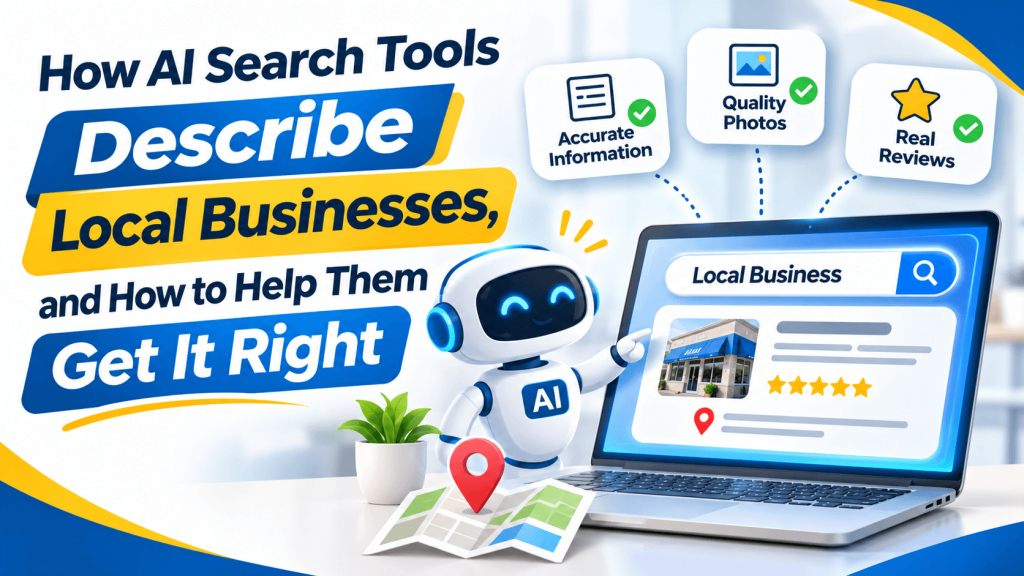
More people now ask questions like “Who does same-day roof repair near me?” in an AI assistant or an AI-generated search summary instead of scrolling through a list of links. The answer they get may name a few businesses and describe what each one does.
If your business information online is thin, outdated, or contradictory, those descriptions can be vague or wrong. The good news is that the fixes are mostly the same fundamentals that already help customers.
Where AI Answers Get Their Information
AI search tools draw on information that is publicly available on the web, including business websites, business profiles, reviews, news mentions, and directory pages. Each platform works differently, and companies rarely publish exactly which sources they rely on for a given answer.
Because of that, it is wise not to chase any single source. Instead, make sure the most important facts about your company are clear and consistent wherever they appear.
Write Answers, Not Just Slogans
Many small business websites say things like “quality you can count on” but never state what the company actually does. AI systems, like people, understand plain statements better.
Add short, direct sentences to your service pages, such as “We install and repair asphalt shingle and metal roofs in Maricopa County.” Include an FAQ section that answers questions customers really ask about pricing factors, service areas, timelines, and licensing. Clear answers help human readers first, and they also make your content easier to quote accurately.
Strengthen the Signals Around Your Website
Your website is only one piece of your digital presence. Accurate listings on your Google Business Profile and relevant online directories help confirm your name, location, and services. Genuine reviews add context about what working with you is like.
If you work in marketing yourself, it also helps to see how others in the field present their services. Browsing the SEO, SMO and PPC listings on boblistings.org/ can show how agencies describe their specialties and service areas in plain, searchable language.
Avoid shortcuts such as publishing stacks of near-identical location pages. They rarely help readers and can make your information look less trustworthy.
Conclusion
Nobody can guarantee how an AI tool will describe a business, and results depend on many factors. What you can control is the clarity and accuracy of your information. Start with your website copy, then confirm that your profiles and directory listings, including boblistings.org/, say the same thing.
Frequently Asked Questions
Can I pay to be recommended by AI search tools?
Some platforms are testing advertising, but organic AI answers are generally not something you can buy directly. The most practical approach is to publish accurate, helpful information about your business and keep it consistent across the sites customers and search tools are likely to see.
What is answer engine optimization?
Answer engine optimization, often shortened to AEO, means structuring content so it directly answers the questions people ask. In practice, that includes clear headings, concise answers near the top of a section, FAQ content, and accurate business details. It complements traditional SEO rather than replacing it.
How do I check what AI tools say about my business?
Ask a few assistants the same questions your customers would, such as your business name plus your city or service. Note any incorrect details, then trace them back to the source when possible, often an outdated listing or old page, and correct it.
Does schema markup help with AI search?
Structured data, such as LocalBusiness schema, helps search engines understand key facts about your company. It does not guarantee how AI tools will use your information, but it is a reasonable, low-risk step when the markup matches the content visible on your page.