A new taco spot in San Antonio spends months on the kitchen build-out, the menu, and the patio. Opening week arrives, and a curious neighbor searches for the restaurant by name. Nothing useful shows up except an old listing for the dry cleaner that used to occupy the space.
Diners decide where to eat quickly, often from their phones. If they cannot find your hours, menu, or location, they will pick somewhere they can.
Set Up Your Core Profiles Early
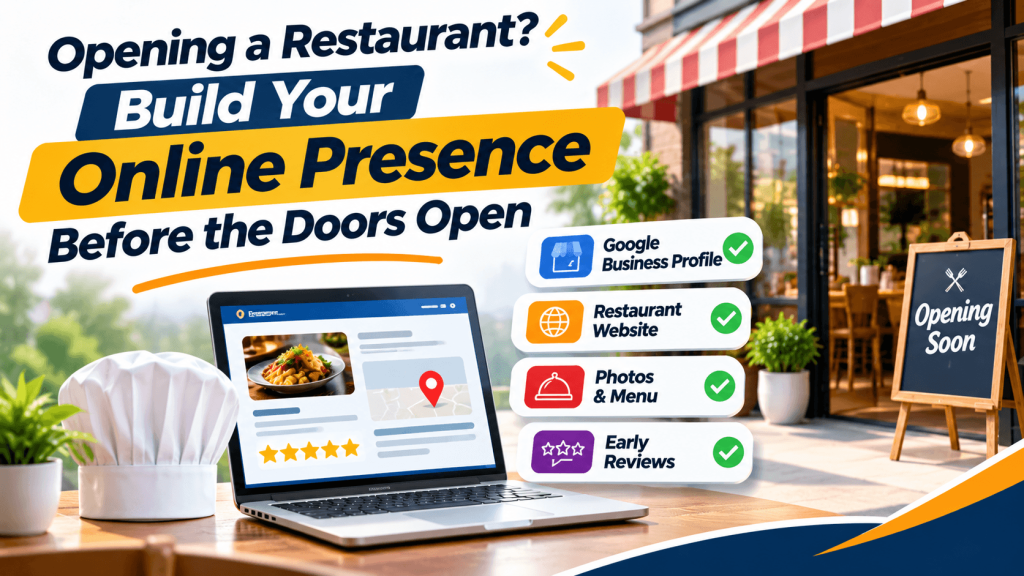
Create and verify your Google Business Profile before opening, so it is ready when people start searching. Add your official name, address, phone number, website, hours, and a clear primary category such as Mexican restaurant or coffee shop. Many platforms let you mark a future opening date.
Claim your profile on the review and reservation platforms your customers use most, and make sure the details match exactly. Use the same restaurant name on every platform, including the sign out front, so diners know they have found the right place.
Give Diners the Details They Want
Most people want to see the menu, prices, and photos before they visit. Publish your menu as text on your website rather than only as an image or PDF, so it is easy to read on a phone and easier for search engines to understand.
Add good photos of signature dishes, the dining room, and the storefront, so first-time guests can recognize the building. Note practical details such as parking, outdoor seating, takeout, delivery partners, and dietary options.
Spread Accurate Information Around Town
Beyond the big platforms, local and general business directories help people confirm that your restaurant exists and how to reach it. Choose relevant sites and keep every listing consistent with your Google Business Profile.
For example, adding your restaurant to the Food and Drink category on boblistings.org/ puts your hours, location, and website in front of people browsing for places to eat.
Also watch for leftover listings from the previous business at your address, and report them as closed so they do not confuse customers. Then plan a soft opening and invite neighbors, since early honest reviews help others decide whether to visit.
Conclusion
Your online presence should be ready before your first customer walks in. Set up your profiles, publish a readable menu, add real photos, and list your restaurant on relevant directories such as boblistings.org/. Then review everything after opening week, when hours and menu items often change.
Frequently Asked Questions
When should a new restaurant create its Google Business Profile?
Ideally a few weeks before opening, once you have a permanent address and signage. That gives you time to complete verification, add photos, and set your opening date. Avoid creating it too early if your address or name might still change, since edits can delay updates.
Should I put my menu prices online?
In most cases, yes. Diners often compare prices before choosing where to eat, and missing prices can make people hesitate. Update your online menu whenever prices change, so customers are not surprised at the register and leave a frustrated review.
What if an old business still appears at my restaurant’s address?
Search for the old business name and your address on major platforms. Most let anyone suggest that a business is permanently closed or has moved. Report it through those official tools, and make sure your own profile is verified and complete so searchers find the correct listing.
Do I need a website if I already have social media?
A simple website is still useful. It gives you a place to publish your menu, hours, and contact details that you fully control. Social media accounts are helpful for updates, but platforms change their rules and features, and not every customer uses them.