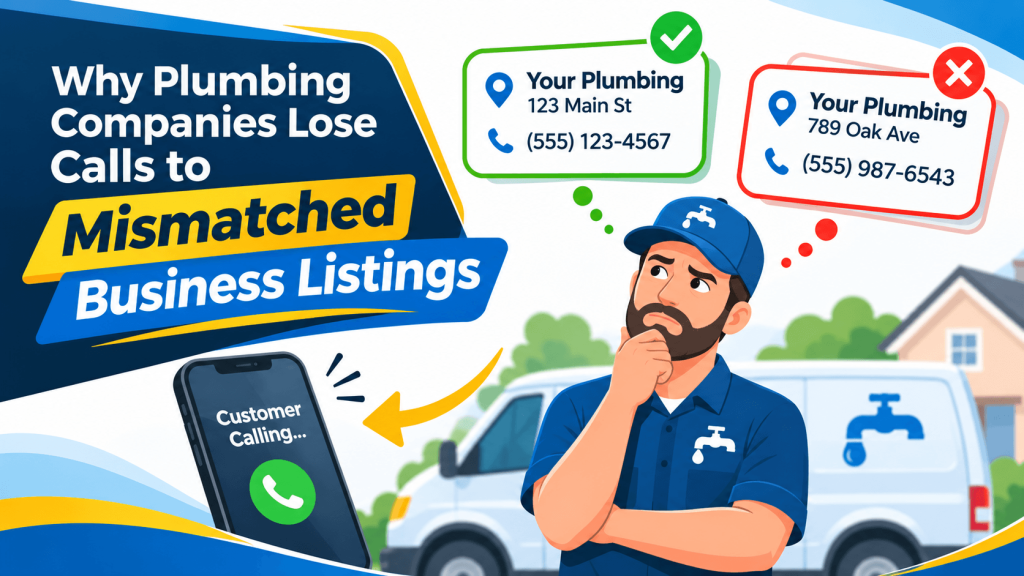
A homeowner in Tulsa wakes up to a burst pipe, searches for an emergency plumber, and dials the first number she finds. It rings through to a disconnected line, because that listing still shows the phone number the company dropped three years ago. She hangs up and calls a competitor.
Scenarios like this are common, and they rarely come from one big mistake. They come from small details drifting out of sync across dozens of websites.
What NAP Consistency Actually Means
NAP stands for name, address, and phone number. These three details appear on your website, your Google Business Profile, social media pages, and every online business directory where your company is listed. Each of those mentions is called a business citation.
When the details match everywhere, customers can trust what they see. When they conflict, people hesitate. Search engines also compare information across sources when they decide how confident they are about a business, so conflicting details can make your company harder to verify.
Where Plumbing Listings Usually Go Wrong
Service businesses change more often than they realize. A plumbing company might move its shop, switch to a call-tracking number, add “& Drain” to its name, or start serving a new county. Each change creates a chance for old information to linger.
Common problems include a suite number missing on some sites, an old tracking number on others, and slight name variations such as “Smith Plumbing LLC” versus “Smith Plumbing & Heating.” None of these looks serious on its own, but together they send mixed signals.
A Simple Audit You Can Do This Week
Start by writing down your official business name, address, and main phone number exactly as they should appear. Then search for your company name plus your city, and check the first few pages of results. Note every listing with outdated or inconsistent details.
Next, update the profiles you control, starting with your Google Business Profile and website footer. After that, claim or correct listings on directories that match your trade and service area. A relevant directory such as the Plumbing and Plumbers category on boblistings.org/ gives homeowners another place to confirm who you are and how to reach you.
Finally, set a reminder to repeat the check every six months, or any time you change a phone number or location.
Conclusion
Matching business information will not fix every marketing problem, but it removes an easy reason for a customer to choose someone else. Pick one official version of your NAP details, correct the listings that drift from it, and keep your boblistings.org/ profile up to date alongside your other citations.
Frequently Asked Questions
Should I use a call-tracking number on directory listings?
You can, but use it carefully. Many marketers list the main business number as the primary phone and add tracking numbers only where a platform supports a secondary field. Swapping primary numbers across sites makes your details harder to match and can confuse customers who saved an older number.
Does a small spelling difference in my business name really matter?
Minor differences like “St.” versus “Street” are usually understood. Bigger variations, such as adding or dropping words from your company name, are more likely to cause confusion. It is best to choose one official name format and use it everywhere you control your listing.
What should I do if I cannot log in to an old listing?
Most directories offer a claim or ownership verification process, often by phone, email, or a postcard. If that fails, contact the site’s support team and ask them to update or remove the outdated listing. Keep a simple spreadsheet so you remember which accounts you control.
How long does it take for corrected listings to show up in search?
It varies. Some platforms update within days, while others take weeks to refresh their data and for search engines to recrawl the page. Corrections are worth making even if you do not see an immediate change, because customers rely on accurate details right away.